
The Difference Between a “Me” Family and a “We” Family
(And Why It Matters So Much in Postpartum & Parenting)
If you’re in the thick of postpartum or early parenting and quietly thinking,
“Why does this feel so heavy? Why do I feel alone even when I’m not alone?”
I want you to know something first:
You are not broken.
As a trauma-informed therapist supporting families across Florida, I see this pattern often. Many of us grew up in what I call a “me” family system and now we’re trying to build a “we” family without ever having been shown what that looks like.
Let’s break down the difference and how to shift it.

A “We” family isn’t about perfection; it’s about shared responsibility, emotional presence, and growing together as a team.
What Is a “Me” Family?
A “me” family is often built around independence, responsibility, and survival.
On the outside, it may have looked functional. But emotionally, it often felt like:
You handled things yourself.
Needing help felt weak or burdensome.
Love was shown through performance or responsibility.
Fairness meant everything was split evenly, no matter the emotional cost.
Emotions were inconvenient or overwhelming.
Children in “me” families often grow into highly capable adults. But postpartum and parenting can reactivate old wounds around dependence, worth, and fairness.
You might notice yourself:
Waiting until you’re overwhelmed before asking for help
Pushing through depletion and resentment
Feeling triggered when your partner rests and you can’t
Believing that needing support makes you a burden
This is not a character flaw.
It’s a nervous system pattern.
Research on attachment and early relational experiences from the American Psychological Association explains how early caregiving environments shape adult stress responses and coping patterns:
What Is a “We” Family?
A “we” family prioritizes capacity over rigid rules and connection over scorekeeping.
In a “we” family:
Help is part of belonging, not a debt.
Responsibilities shift based on who has capacity today.
Needs are signals, not failures.
Emotional repair matters more than perfection.
Fairness means responding to needs, not splitting everything evenly.
This is especially important in postpartum, where physical recovery, sleep deprivation, and hormonal shifts significantly impact mental health.
Postpartum Support International outlines how common postpartum mood and anxiety disorders are and why support systems are essential for recovery:
A “we” family understands that parenting is not a competition of endurance.
It’s a partnership.
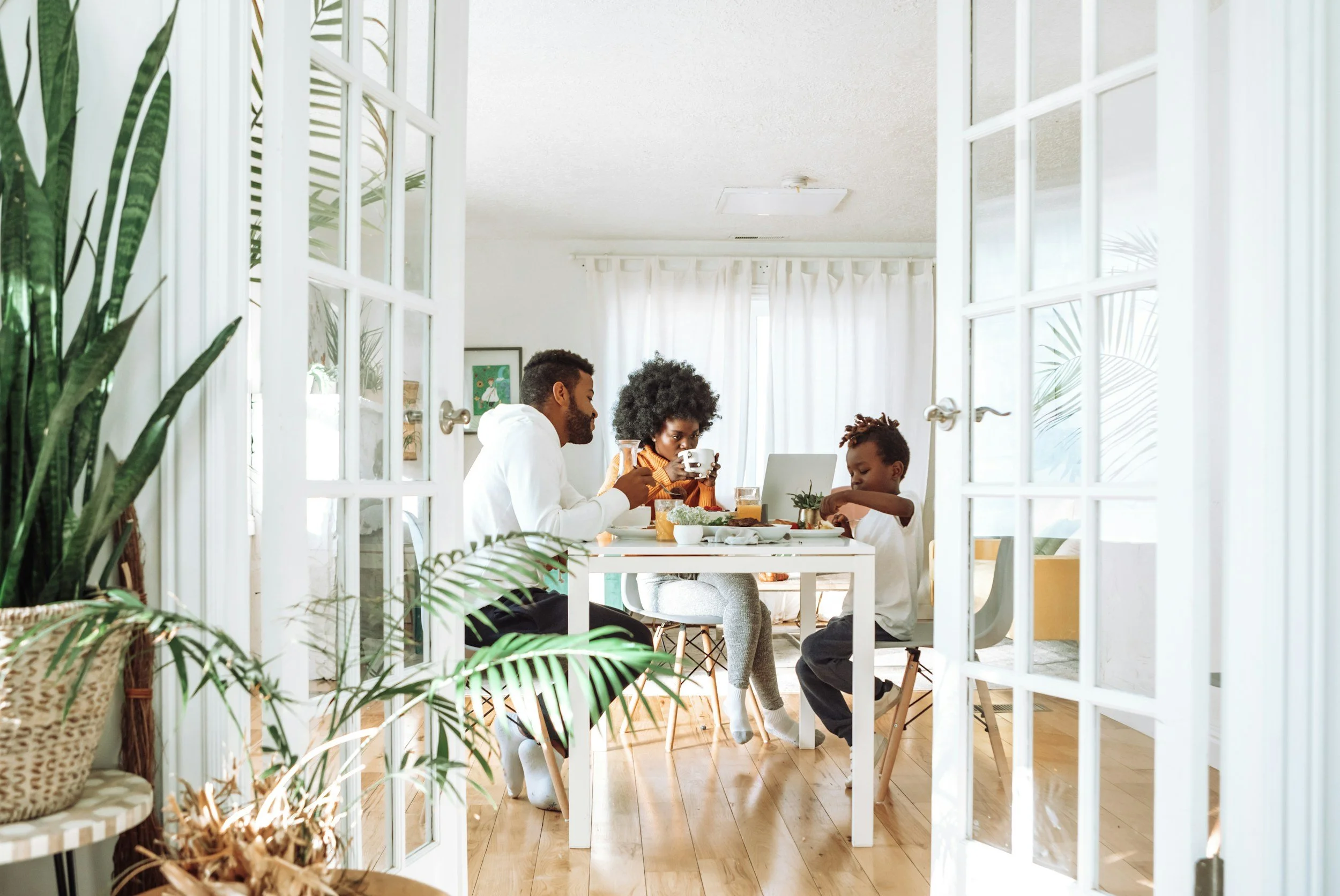
Connection happens in ordinary moments. A “We” family is built through daily experiences of being seen, supported, and valued together.
Why Postpartum Triggers “Me” Patterns
Postpartum is one of the most vulnerable transitions in adulthood. It brings:
Sleep deprivation
Constant dependency from your baby
Unequal physical recovery
Shifts in identity
Emotional overload
If you grew up learning that you must handle things alone, postpartum can feel like an internal war.
Common trauma responses I see:
Over-functioning and taking control
Shutting down emotionally
Irritability or criticism
Sudden shame or panic
Telling yourself, “I should be able to handle this.”
The National Institute of Mental Health explains how chronic stress and trauma sensitize the nervous system, making everyday stressors feel threatening:
The nervous system interprets dependency as danger, even when you are safe.
And that’s where new patterns must be practiced.
What Has to Shift to Build a “We” Family?
1. Shift How Help Works
Old pattern: I should handle this myself.
New practice: Ask early and clearly.
Old pattern: Help creates debt.
New practice: Help builds belonging.
Try language like:
“I’m at capacity and need support.”
“Can we problem-solve this together?”
“I need rest before I can re-engage.”
External language interrupts shame.
2. Shift How Responsibility Works
In a “me” system, responsibilities stay fixed.
In a “we” system, they shift based on capacity.
If one parent is sleep deprived or recovering physically, fairness means flexibility.
That is not weakness.
That is regulation.
3. Shift How Needs Are Interpreted
Old belief: Needs are disruptive.
New belief: Needs are information.
When your child has big emotions, when you feel touched out, when resentment rises - those are signals, not failures.
Practical Tools to Reduce Trauma Responses
These are not about being perfectly calm.
They are about creating safety.
Choose 1–3 to practice:
Slow exhale breathing while holding your baby
Naming what you’re feeling without fixing it
Pausing before responding
Grounding through physical sensation
Taking a brief break instead of pushing through
Repair matters more than perfection.
You can say:
“I reacted from stress. Let me try again.”
“I’m learning new ways to respond.”
That’s how a “we” family is built, one repair at a time.
Redefining Fairness in Parenting
Fairness is not 50/50.
Fairness means:
Responding to capacity
Honoring recovery
Sharing emotional labor
Protecting rest
When children see adults ask for and receive help, they learn that belonging includes support.
That’s generational change.
Ready to Build a “We” Family?
If this blog feels familiar, you don’t have to figure it out alone.
I offer trauma-informed postpartum and parenting therapy in Florida (virtual and in-person options available). Together, we work on:
Nervous system regulation
Reducing resentment and scorekeeping
Communication around capacity
Repair and emotional safety
Breaking “me” family survival patterns
Schedule a therapy consultation in Florida today.
Download the Free Guide
I created a deeper resource called:
Inside you’ll find:
Reflection prompts
Trauma trigger identification
Scripts to interrupt shame
Regulation tools
Weekly “we” family practices
👉 Download the guide here.